
Piano-Key vs Thermostatic Shower Systems: A Buyer Comparison

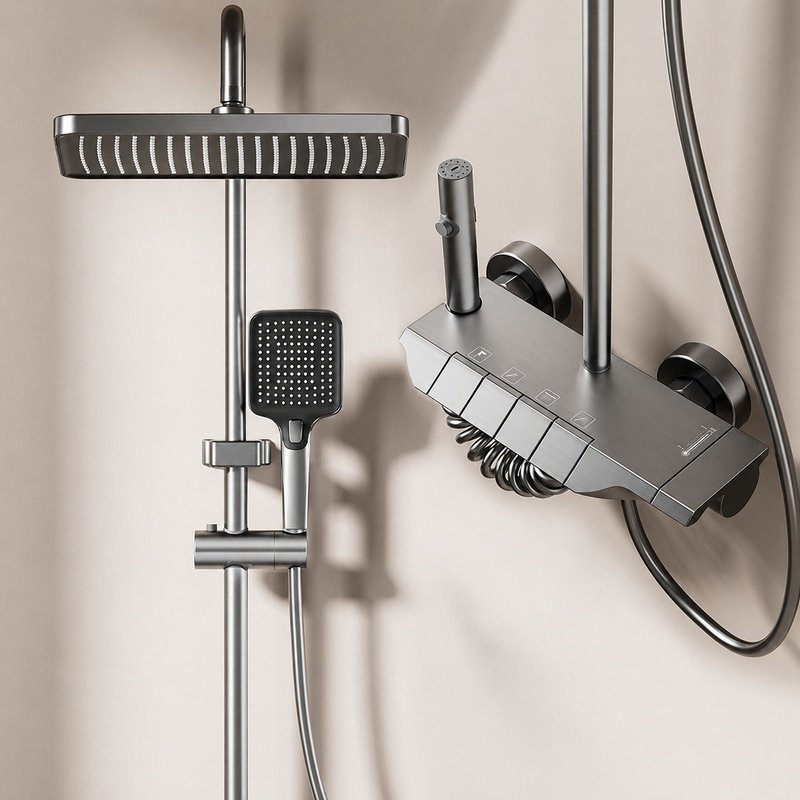
Piano-key controls, a digital temperature display and a thermostatic valve describe different features. A shower can combine them, but one does not prove the others are present. For wholesale or hotel purchasing, specify the control mechanism and the complete supplied configuration before comparing quotations.
This guide helps you evaluate the 4239 piano-key shower system and other models in the Aqvia shower set collection. The catalogue references below are starting points for an enquiry, not independently tested performance recommendations.
Three features to separate in your specification
| Feature | What it describes | What to confirm |
|---|---|---|
| Piano-key or push-button controls | The user interface for selecting or operating water outlets. | Which button operates each outlet, whether outlets can run together and how flow is adjusted. |
| Digital temperature display | A display of a temperature reading; the screen alone does not identify the mixing mechanism. | What is measured, how the display is powered and how the controls operate without the display. |
| Thermostatic mixing | A valve mechanism that regulates the mixture of hot and cold water in response to temperature. | The exact cartridge, operating limits, commissioning instructions and model-specific test evidence. |
For general background, hansgrohe explains the distinction between thermostatic and manual shower mixers, while its Select technology guide describes push-button operation. These references explain control concepts; their product features and certifications do not transfer to Aqvia models.
Build your shortlist around the model, not the marketing label
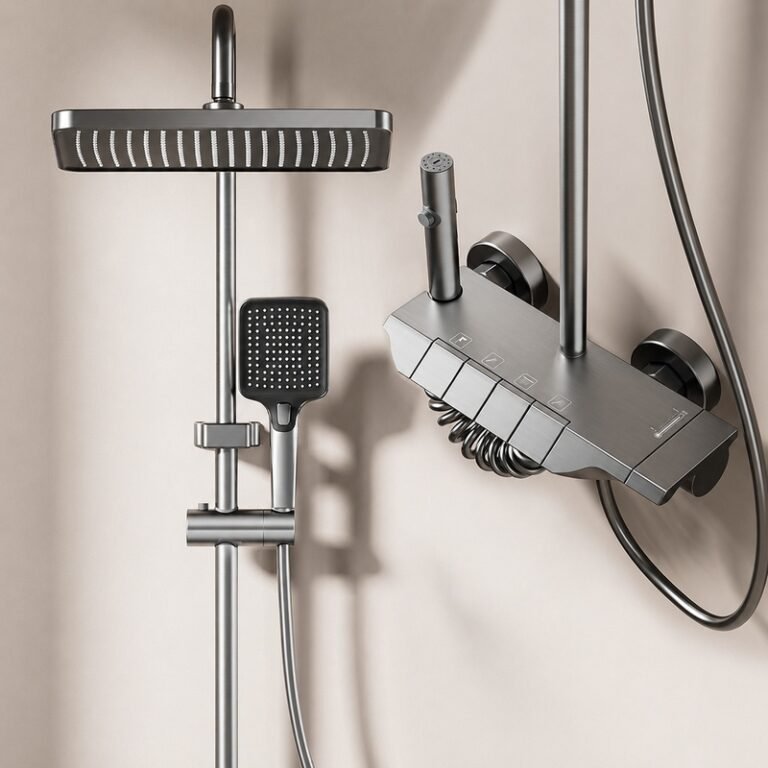
Start with a model number and ask for a current configuration sheet. The Aqvia catalogue identifies 4239 as a piano-style square shower set, 4151 as a square rain and hand-shower set, and 4294 as a square rain-shower reference. These are separate products. Similar photographs or a common finish do not establish identical valves, dimensions or pack contents.
Record the selected overhead shower, hand shower, hose, holder, control unit and any additional spray outlet in one parts list. Mark optional components separately. If a quotation includes an accessory absent from the drawing, resolve that difference before approving the sample. For repeat purchases, retain the accepted model revision and identify substitutions in writing.
Questions to ask when thermostatic control is required
- What is the cartridge manufacturer or part reference for the offered configuration?
- What hot and cold supply conditions does the manufacturer specify?
- What temperature adjustment, limit-stop and commissioning instructions apply?
- What documented behaviour is expected when supply conditions change?
- Which test report or certification covers this exact product and destination requirement?
- How can the cartridge and other serviceable components be accessed and replaced?
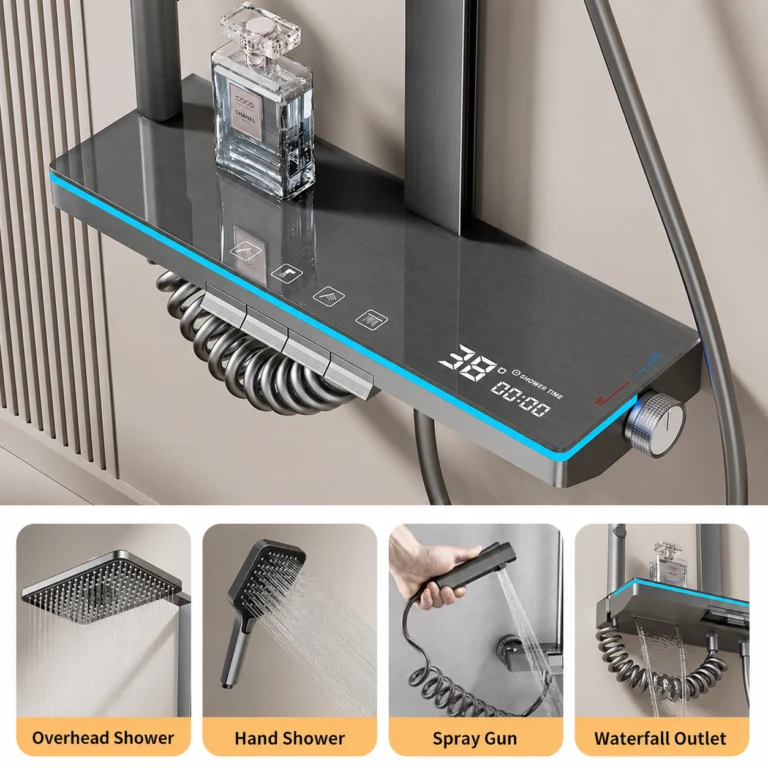
A catalogue temperature such as “38°C” is not a complete operating specification or proof of temperature regulation. Ask the supplier to distinguish a preset position, displayed reading, adjustable range and permitted inlet temperature. A qualified installer should assess suitability using the product instructions and the actual water system.
Confirm installation and maintenance access
Keep the control style separate from the mounting arrangement. A piano-key face does not tell you whether pipework, valve bodies or fixing points will be accessible after installation. Request a dimensioned drawing showing inlet positions, fixing points, finished-wall reference and service access.
For renovations, attach photographs and measurements of the existing connections. For hotel projects, link each shower model to a room type and retain the approved drawing. Use the exposed versus concealed procurement guide to organise the installation questions and the hotel spare-parts guide to prepare the maintenance schedule.

Evaluate the sample before committing to a bulk order
Have the responsible installer review the sample under the supplier’s documented conditions. Record the tested configuration, the outlet selection sequence, control access and any observations that need clarification. Check that the supplied packing list matches the sample. Do not substitute an informal demonstration for a required independent test report.
For a private-label range, approve the control symbols, instructions, finish reference and packaging artwork together. Product photographs should show the version being supplied. Keep the sample approval alongside the packaging checklist so future orders can be compared with the same reference.
Send a quotation brief that can be answered
Include model references, quantities by finish, destination, required control type, installation drawing and branding needs. Ask for separate confirmation of sample availability, minimum order quantity, lead time, spare parts and shipping scope. These depend on the model and order; a generic website estimate cannot replace the written quotation.
Use the free bathroom RFQ worksheets and the sample inspection checklist to keep your comparisons consistent.
Prepared by Aqvia Bath for product sourcing. Catalogue images illustrate product references, not verified installation or performance claims. Confirm current model documentation and commercial terms before purchase.
Continue your sourcing research
Shower Set Sample Inspection: A Practical Checklist Before a Bulk Order
Build a repeatable shower-set sample review covering parts, installation fit, outlet operation, finish and the evidence to approve before a bulk purchase.
Read the guide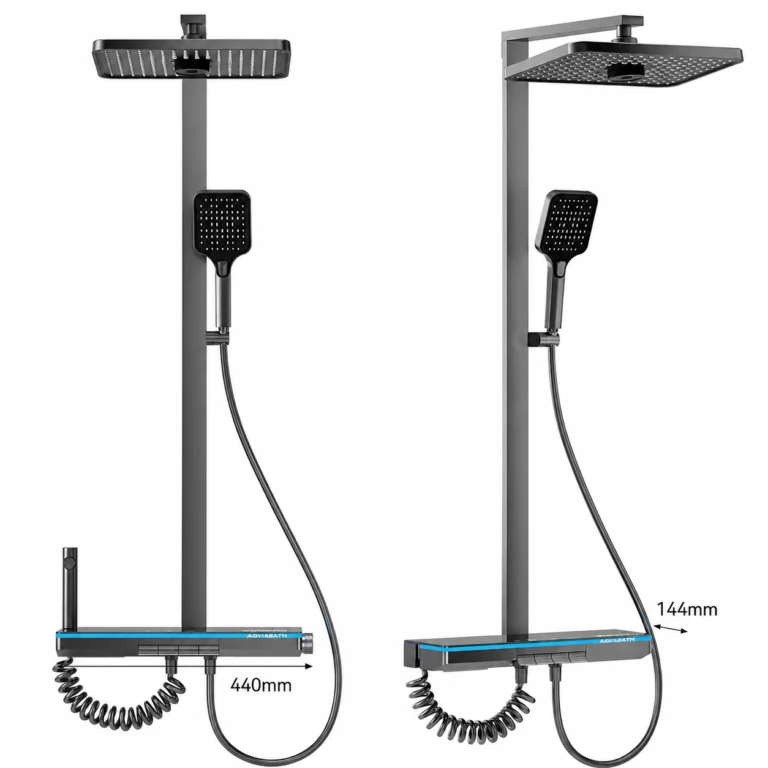
Exposed vs Concealed Shower Sets: A Procurement Guide for Renovations and Hotels
Compare exposed and concealed shower installations by wall access, rough-in coordination, service access and purchasing scope before selecting a project model.
Read the guide
Hotel Shower Spare Parts: Build a Model Schedule Before the First Room Opens
Plan hotel shower spares using room-model mapping, verified part numbers, service access, storage records and replenishment decisions instead of a universal spare ratio.
Read the guide