
Exposed vs Concealed Shower Sets: A Procurement Guide for Renovations and Hotels

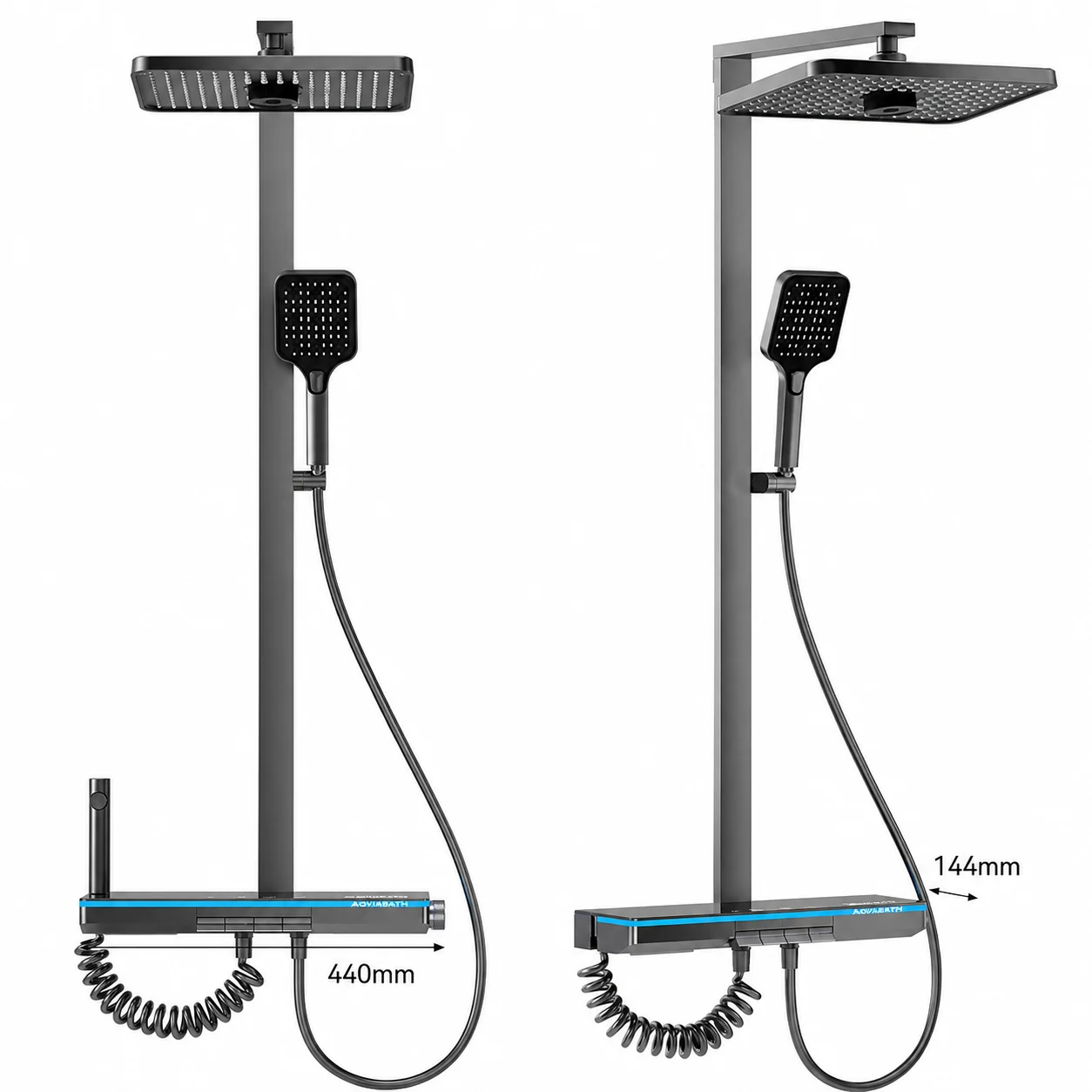
Choosing between an exposed and a concealed shower is an installation and maintenance decision as much as a design choice. For a hotel refurbishment, the strongest option is the one that fits the room survey, renovation programme and service plan. A clean catalogue photograph cannot answer those questions on its own.
Start by identifying what is behind the existing wall and what the project permits you to change. Then request a model-specific drawing and complete component list. Product names are not a reliable substitute for those documents.
What is the practical difference?
In an exposed arrangement, the mixer or main control body is visible on the wall. A concealed arrangement places a compatible basic body behind the finished wall, with controls or trim visible outside. Manufacturer guidance from hansgrohe on manual shower valves illustrates this distinction; compatibility must still be checked for the exact system being purchased.
| Purchasing question | Exposed arrangement | Concealed arrangement |
|---|---|---|
| Existing bathroom survey | Check visible connection positions and mounting clearance | Check wall construction, available depth and access to the intended body location |
| Order scope | Confirm the complete mixer, outlets and mounting kit | Identify basic body, trim, outlets and every connecting component separately |
| Programme coordination | Confirm compatibility with the planned surface and supply positions | Coordinate rough-in approval with wall finishing and later trim installation |
| Future service | Confirm how the body and consumable parts are removed | Confirm what can be serviced through the trim opening and what needs other access |
Survey the room before comparing quotations
Prepare one survey for each room type, rather than assuming every bathroom is identical. Record pipe positions, connection specifications, finished wall dimensions, shower-screen position and usable height. Identify whether the wall finish will stay or be replaced. Flag any room with unusual access or a different supply arrangement.
Give the same survey to every shortlisted supplier. A quotation based on a complete system should not be compared with a price covering only visible trim. Ask the installer to identify additional fittings or construction work outside the product supply scope.

Check concealed system compatibility as a set
For a concealed option, record the exact body and trim combination in the purchase schedule. Ask for permitted installation depth, outlet arrangement and the sequence for testing before closing the wall. Do not assume that similar-looking trims from different model families fit the same body.
Discuss future replacement with the supplier and installer. Which cartridge, diverter, seals and trim components can be replaced? Are replacement part references available? What access is required? Keep this information with the as-built room records instead of relying on the original salesperson’s memory.
Compare total project scope, not just unit price
Build a comparison with separate lines for supplied components, adapters, installation work, wall finishing, inspection and initial spare parts. Some costs will come from the contractor rather than the product supplier. Avoid assuming a universal installation saving for either configuration; the existing bathroom and chosen system determine the work.
For repeated hotel rooms, review one representative mock-up before final approval. Check control access, cleaning access and hose movement with the actual screen and fittings installed. Record changes before ordering the remaining rooms.
Turn the decision into a purchase schedule
List room type, installation arrangement, approved model revision, finish reference, quantities and included components. Attach the installer-reviewed drawing and mock-up approval. Link every spare part to the corresponding model using the hotel spare-parts planning guide.
Common buyer questions
Is a concealed shower always the better choice for a premium hotel?
No. The design brief, wall construction, service access and renovation scope should drive the choice. A well-coordinated exposed system can be appropriate where access or construction constraints matter.
Can a trim be changed later without changing the concealed body?
Only if the manufacturer confirms compatibility with that exact body and revision. Obtain the matching references before purchase.
The 4151 square rain and hand-shower set is a catalogue starting point for a visible shower-system discussion. Send your room survey when requesting a model recommendation; do not infer concealed compatibility from appearance.
Prepared by Aqvia Bath for wholesale and project buyers. Catalogue examples are illustrative. Confirm current model specifications, compatibility, included parts and commercial terms in the written quotation. This guide does not certify a product or replace professional installation advice.
Continue your sourcing research

Hotel Shower Spare Parts: Build a Model Schedule Before the First Room Opens
Plan hotel shower spares using room-model mapping, verified part numbers, service access, storage records and replenishment decisions instead of a universal spare ratio.
Read the guide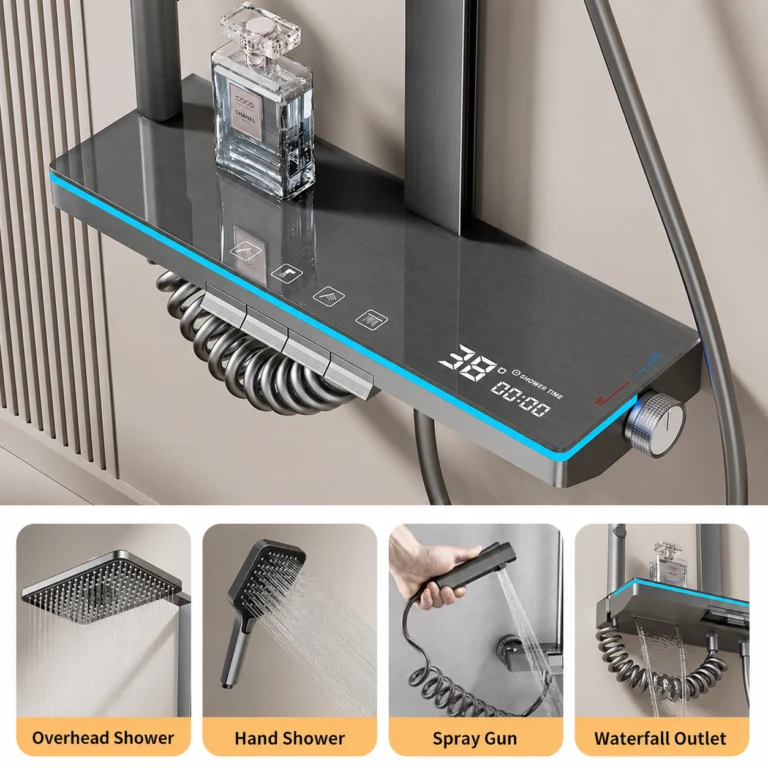
Shower Set Sample Inspection: A Practical Checklist Before a Bulk Order
Build a repeatable shower-set sample review covering parts, installation fit, outlet operation, finish and the evidence to approve before a bulk purchase.
Read the guide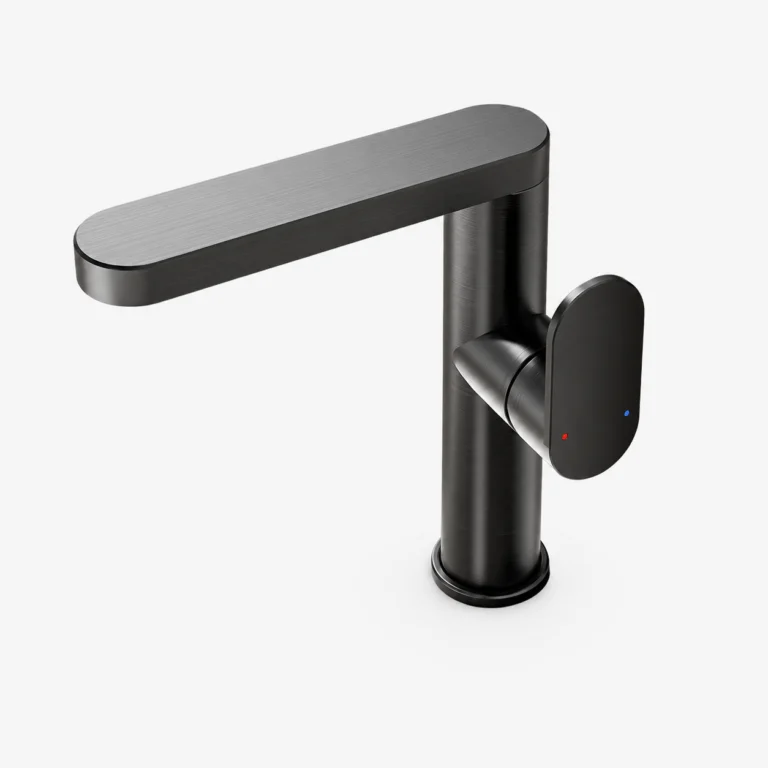
Basin Faucet Height and Spout Reach: What Buyers Should Measure Before Ordering
Use a basin-and-faucet measurement worksheet to check outlet reach, rim clearance, mounting space and handle movement before approving samples or bulk orders.
Read the guide